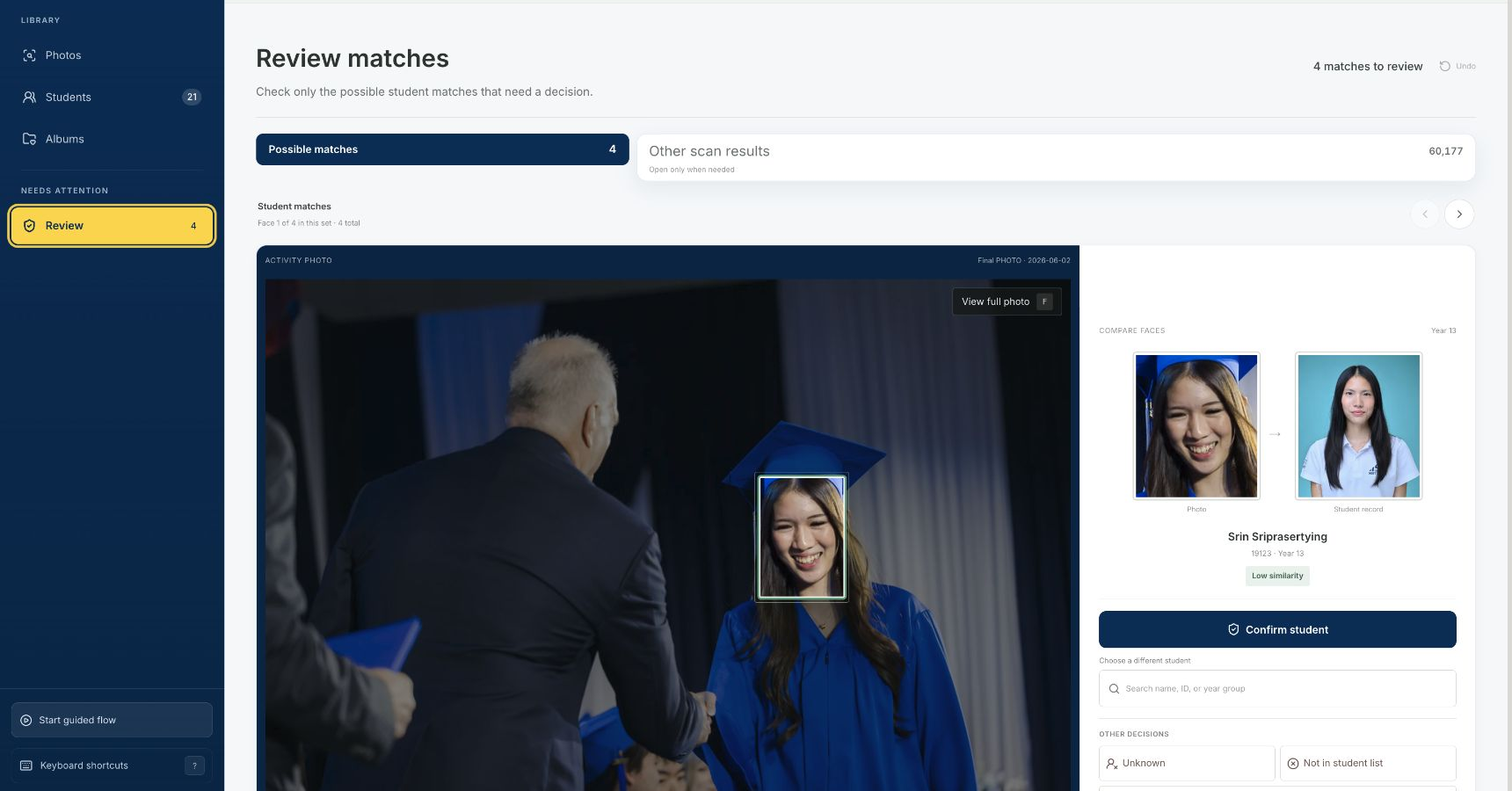
 Only 4 matches need a decision
The archive brings uncertain matches together in one place.
NIST already has years of valuable activity photography. The challenge is finding the right image again when someone actually needs it.
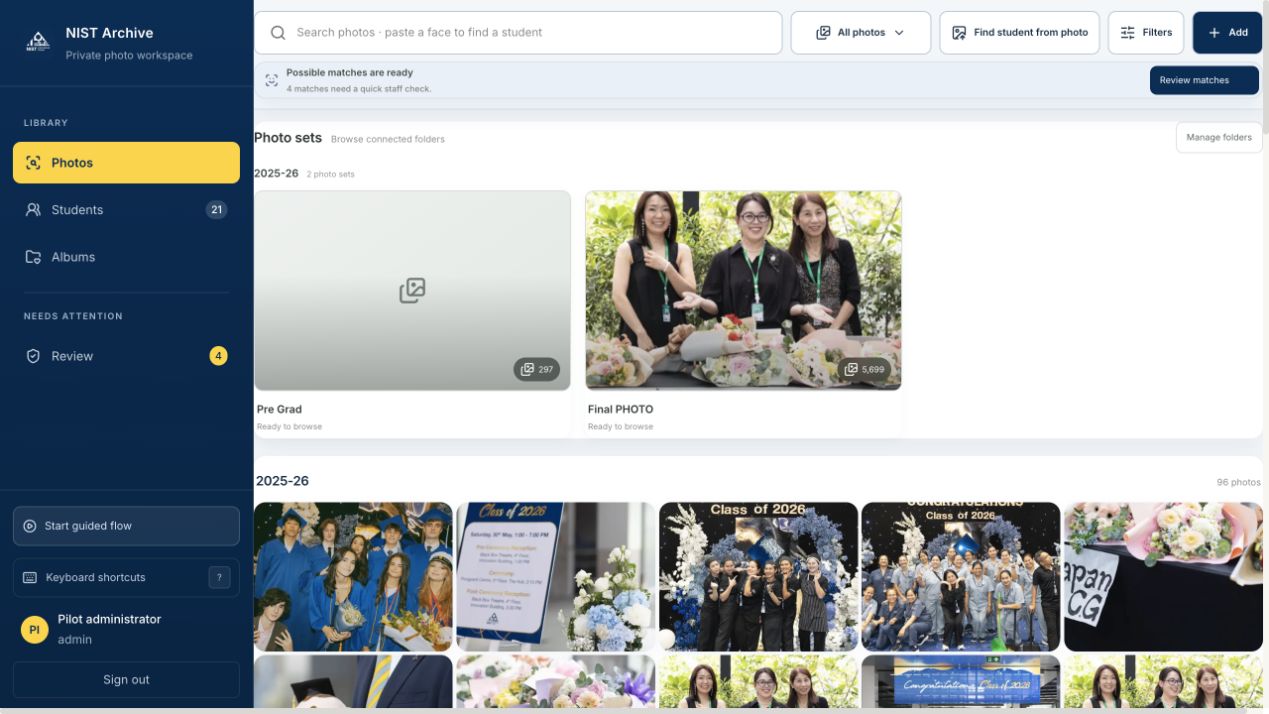
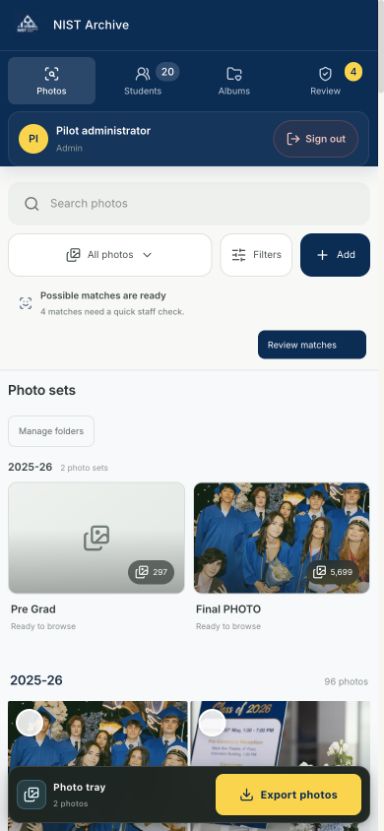
That is why staff do not know which folder to open first.
Which Apisada? Which class? Which year?
The archive connects the folders staff already use with the words they remember.
 “Do we have photos of Apisada?”Staff remember the student, not the folder.
Google Drive remains the active photo source in this controlled pilot.
A staff member can search for a student and see relevant photos across activities—without manually browsing event folders.
The archive prepares the information in the background. Staff only need to search, choose and export.
Private storage · Controlled access · Background processing
The archive does not make identity decisions. It only brings the uncertain matches to the right person.
Only 4 matches need a decisionThe archive brings uncertain matches together in one place.
The goal isn’t to remove human review. It’s to focus human attention where it is needed.
NIST does not need to replace its archive. It needs a layer that turns it into useful results.
Event foldersPhotos stay where they are
Student recordsNames and year groups
Reference portraitsFor staff review
PRIVATE SEARCH LAYERNIST StudentFind the right photosSearch by student or activity
Collect a selectionKeep collections and selections
Export when readyPrepare files together
The system creates additional value from assets NIST already owns.
The system works with the cloud folders photographers already use, then helps staff find likely student photos. Staff review every result before it is used.
 GOOGLE PHOTOSGood at finding personal photos
It can search people, things and places inside Google Photos.
Why not as NIST’s core? It is a separate photo library—not a workflow that works across the folders photographers already use. MICROSOFT ONEDRIVEGood at storing and organising files
It offers a photo gallery, tags and search.
Why not as NIST’s core? It is another place to store files, but not a workflow that finds by student and lets staff check results. VIDIGAMIDesigned for school photo libraries
A strong reference for private archives and school sharing.
Why not as NIST’s core? It is a new destination for the archive. NIST needs a layer that can start with existing photographer workflows instead. PIXEVETYStrong on privacy and consent
It keeps permissions and consent visible around media.
Why not as NIST’s core? NIST should apply this principle, but keep its source-cloud choice open rather than replace every photographer workflow. ZENFOLIOBuilt for photographer galleries and sales
Useful for showcasing, sharing and selling photography.
Why not as NIST’s core? Its focus is photographer delivery and commerce—not an internal archive that joins student data to staff review. PIMEYES / REVERSELYSearches the public web by image
Useful for finding where a similar image or face appears online.
Why not as NIST’s core? It searches the open web, not NIST’s private photo archive or the approval workflow around it.The flow is connected from source folders to staff-ready output. It is still a controlled pilot—not yet a school-wide rollout.
PROVEN IN THE PILOT
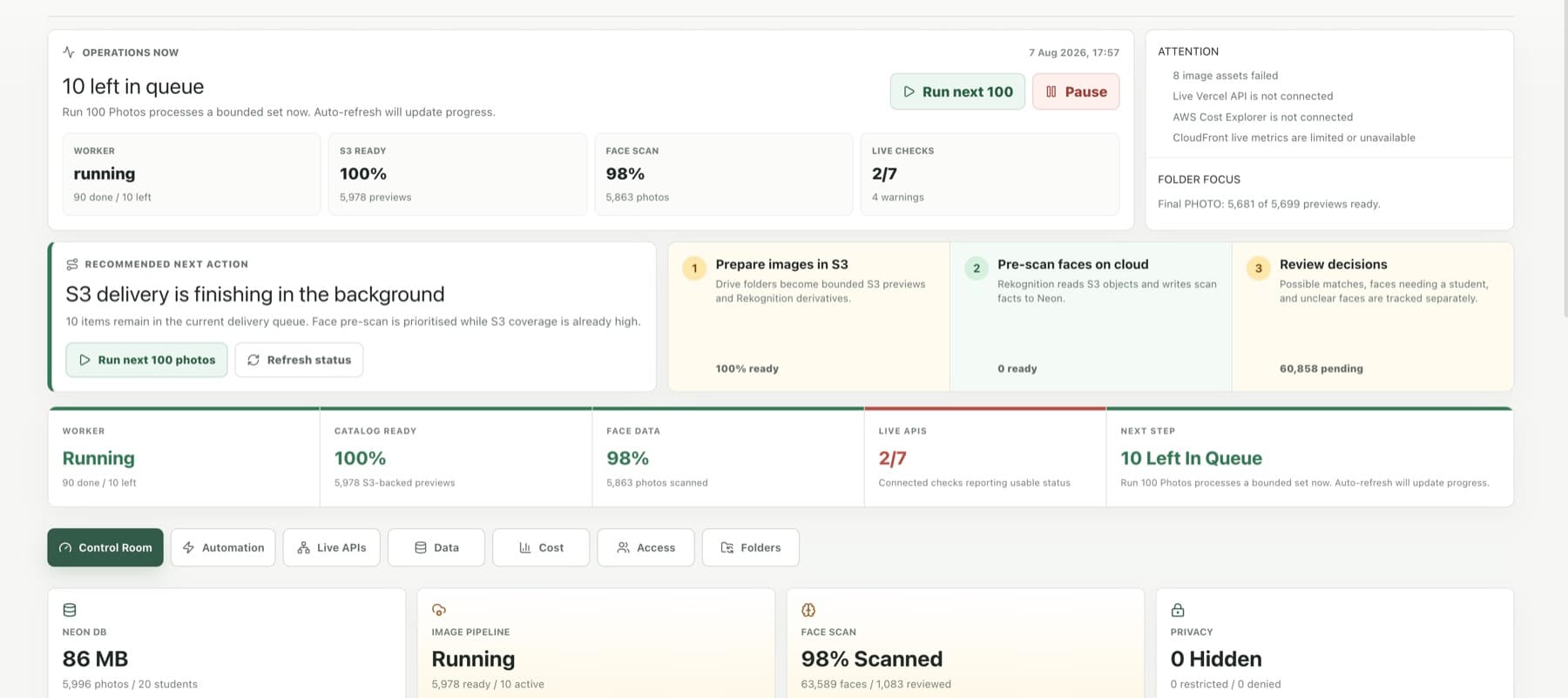
See processing progress, warnings and the next action in one place.
This is a staged rollout: prove value first, make it dependable next, and expand only when the evidence is ready.
Measure whether staff find the right photos faster and can trust the suggested matches.
Evidence to move on: time saved + useful resultsSet clear access, keep the system reliable, and define what happens when a result is uncertain.
Ready when: staff can use it with confidenceAdd year groups and teams in stages—not all at once—while keeping a sustainable operating model.
Scale with: approval + evidence + operational ownerSee what works before rolling it out more widely.